By
By 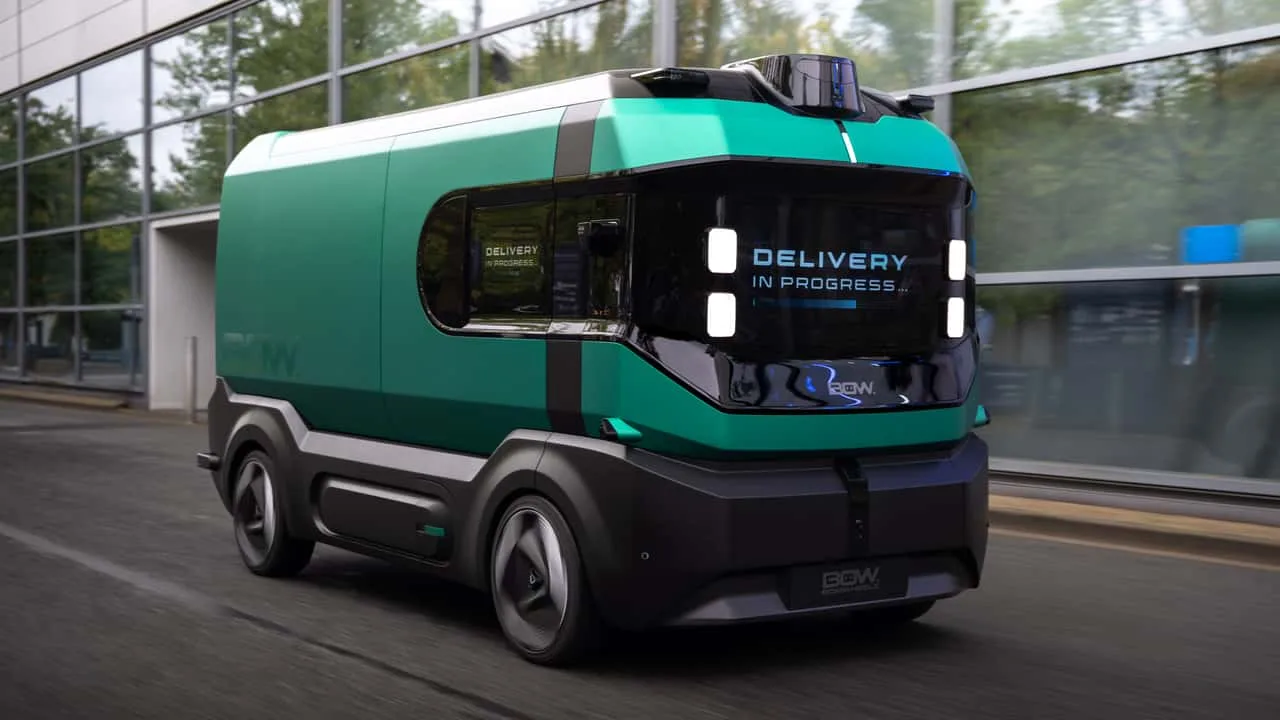
Stellantis has unveiled BOW, a fully electric, driverless delivery concept designed to move parcels without a human behind the wheel. Developed by Stellantis Pro One with autonomy specialist UQI Robotics, the box-shaped vehicle made its debut at IAA Transportation in Hannover, Germany.
BOW stands for “Box On Wheels,” and the name describes the concept’s extreme focus on cargo. There is no windshield, dashboard, or driver seat because the vehicle is designed around autonomous delivery rather than conventional van operation. Stellantis says BOW is a concept only, not a product currently available to order.
Designed for controlled logistics zones
Stellantis is positioning BOW for tightly managed environments where autonomous driving can be tested and deployed with fewer variables. Potential operating areas include factories, hospitals, airports, low-emission zones, and other controlled urban logistics spaces.
The company has not presented BOW as a vehicle for unrestricted public-road operation. Its stated use cases focus on places where routes and vehicle movements can be managed more closely than in normal mixed traffic. That makes the concept a targeted experiment in last-mile logistics rather than a replacement for today’s delivery vans across every city street.
Electric power, but few technical details
Stellantis has confirmed that BOW is fully electric, but it has not released a detailed specification sheet. Battery capacity, driving range, payload, motor output, sensor hardware, and autonomy level remain undisclosed.
The missing figures reflect BOW’s status as an early-stage technology demonstrator. Stellantis says initial validation runs will begin in Europe, but it has not announced a production timeline or indicated when fleet operators could use the vehicle in regular service.
Stellantis and UQI Robotics partnership
The project combines Stellantis Pro One’s commercial-vehicle expertise with UQI Robotics’ autonomous-driving capabilities. That partnership gives BOW a different role from a conventional van launch: it demonstrates how an automaker and a robotics specialist could combine vehicle engineering, autonomy systems, and fleet operations.
BOW was shown alongside Pro One NEXT, Stellantis’ fleet uptime operating system, and a new commercial van at Hannover. The shared presentation places the autonomous concept within Stellantis’ wider commercial-vehicle strategy, which also includes connected data and services intended to help fleets remain operational.
When could BOW reach fleets?
There is no confirmed production schedule, retail price, or purchase availability for BOW. European validation work is the next stated step, and the results will determine whether the concept advances beyond demonstrations in controlled areas.
For now, BOW is best understood as a study of driverless electric delivery in environments where routes and operating conditions can be tightly managed. Its eventual commercial prospects will depend on the validation program, autonomy performance, and the practical requirements of fleet operators.