By
By 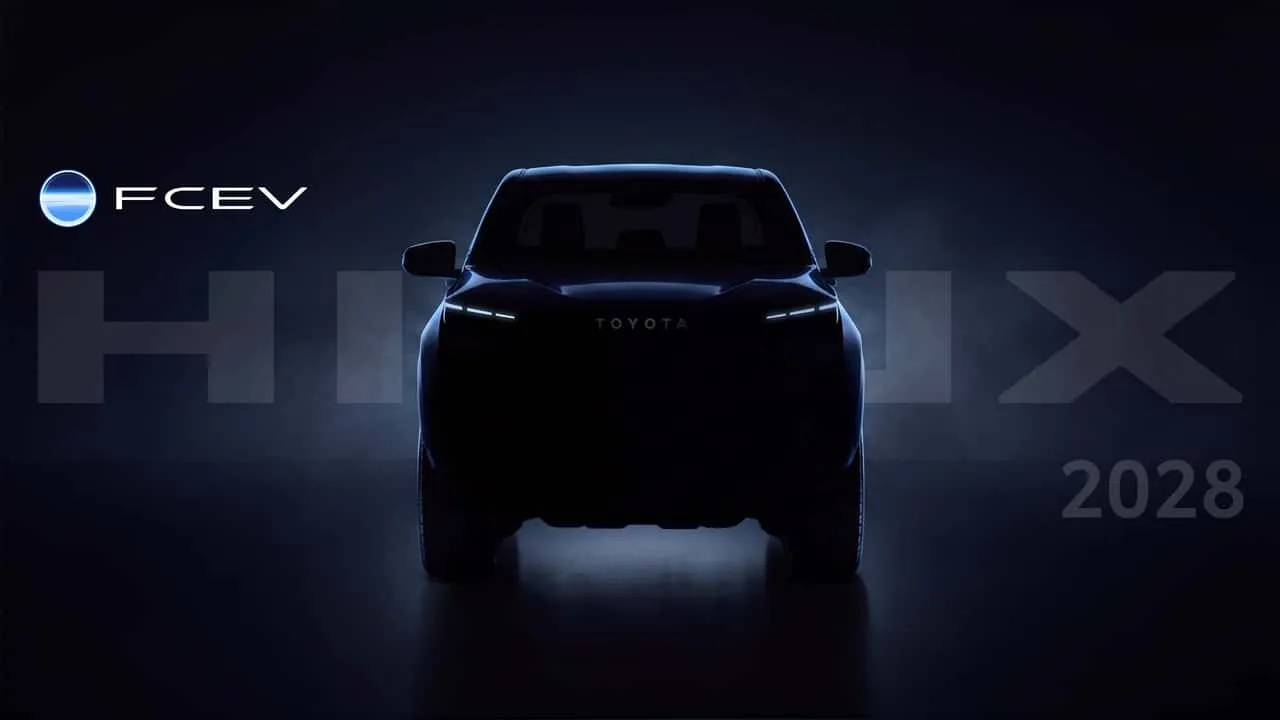
Toyota plans to begin production of a hydrogen fuel cell Hilux in 2028, giving European commercial customers a zero-emissions pickup with a targeted 248 miles of WLTP range. The Hilux FCEV will also target up to 5,512 pounds of towing and roughly five-minute refueling when a hydrogen station is operating normally.
Toyota outlined the program at IAA Transportation 2026 in Hannover. The hydrogen model will join, rather than replace, the existing Hilux lineup and will be aimed first at corporate fleets and leasing companies. Toyota has not announced pricing, a U.S. launch, or a U.S. timeline.
Hydrogen Hilux powertrain and performance
The Hilux FCEV will use a fuel cell system that draws on technology from Toyota’s Mirai hydrogen sedan. Unlike a hydrogen combustion engine, a fuel cell generates electricity through a chemical reaction between hydrogen and oxygen. Water is the only tailpipe output, according to Toyota.
Toyota says the pickup is being developed on the ninth-generation Hilux platform already used for the electric Hilux and its diesel and gas-powered siblings. The company has not released power or torque figures for the fuel cell truck.
The 248-mile WLTP range is a target rather than a final production specification. Toyota also estimates a refueling time of about five minutes, provided the station is operating normally. That could make the truck more practical for fleets that cannot afford extended charging stops during a workday.
How it compares with the electric Hilux
Based on the figures currently available, the hydrogen model is designed to exceed the battery-electric Hilux in both range and towing capacity. The Hilux BEV is currently listed with roughly 149 to 152 miles of WLTP range and up to 4,410 pounds of braked towing, depending on the market and configuration.
The hydrogen version’s 5,512-pound towing target would add more than 1,000 pounds of capacity over the electric model’s stated maximum. For utility contractors, landscapers, and other businesses that tow equipment regularly, that difference could affect which trailers the truck can handle.
The charging-versus-refueling gap is also significant. Toyota cites about 30 minutes to charge the electric Hilux from 10 to 80 percent using a suitable high-power DC charger. Actual charging times depend on conditions and charger availability, while hydrogen refueling is expected to take about three to five minutes.
Hydrogen availability remains the key hurdle
The fuel cell Hilux’s usefulness will depend heavily on infrastructure. Recent European data cited for the program points to close to 200 publicly accessible hydrogen stations across the region, including the UK, compared with more than 1.3 million public EV charge points in the European Union.
That gap explains Toyota’s initial focus on professional customers. Fleet operators may be able to plan around dedicated routes, depot access, leasing arrangements, and service support more easily than private drivers. Toyota’s next steps will include turning the range and towing targets into production specifications while building the commercial network needed to support the truck.