By
By 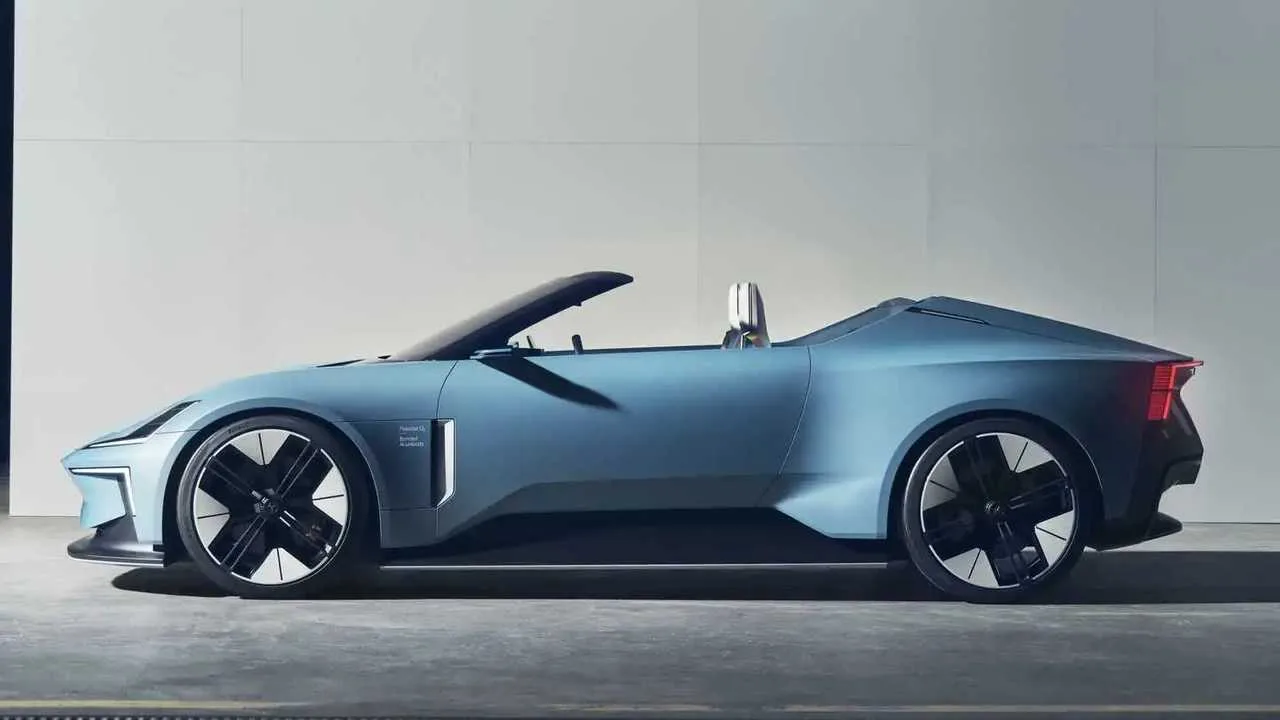
Polestar says its 6 electric convertible is still moving toward production, with most of the development work complete. The two-door roadster was originally scheduled to launch in 2026, but tariff-adjusted pricing could determine whether American buyers ever get the chance to order one.
The Polestar 6 shares its bonded-aluminum architecture with the upcoming Polestar 5 sedan. In an interview with Edmunds, Polestar Global Head of Product Communications Graeme Lambert said the two models are closely related and that the 6 can use much of the sedan's existing componentry. That makes the convertible effectively a two-door derivative of the Polestar 5 rather than a clean-sheet program.
Polestar 6 development is nearly complete
Polestar has not yet shown a production version of the 6, while the Polestar 5 remains the priority. Even so, Lambert indicated that the convertible is essentially ready from a development standpoint. The shared architecture was designed to scale across different vehicle types, allowing Polestar to carry over much of the 5's underlying hardware.
The 6 was first announced as a limited-edition model with 500 available build slots. Customers claimed those slots quickly, prompting Polestar to shift toward an on-demand production approach. That change is intended to allow everyone who expressed interest to receive a car, rather than limiting output to the original allocation.
Tariffs threaten the U.S. business case
The biggest question is not whether Polestar can build the car, but whether it can price the 6 competitively in the United States. The Polestar 5 is built in China and starts at around €120,000 in Europe, equivalent to roughly $140,000 in the U.S. before taxes and other costs. A 100 percent tariff would be applied to that China-built electric sedan, according to the reporting cited in the original discussion.
The Polestar 6 faces an even steeper challenge. It was expected to start at approximately $200,000 before tariffs. Applying the same 100 percent tariff would push the roadster's potential U.S. price dramatically higher, creating a major obstacle for a car already positioned as an exclusive, high-performance electric convertible.
What this means for buyers
Polestar's move to on-demand production suggests the company still sees a path for the 6 beyond its initial 500-car allocation. However, the model's U.S. availability may depend on how import rules and tariff costs develop. The Polestar 5's own launch plans could provide an important signal, since the sedan uses the same basic architecture and is also built in China.
For now, Polestar continues to describe the 6 as an active program rather than a canceled project. But until the company confirms production timing, final pricing and U.S. distribution, American customers who reserved interest in the convertible still face substantial uncertainty.