By
By 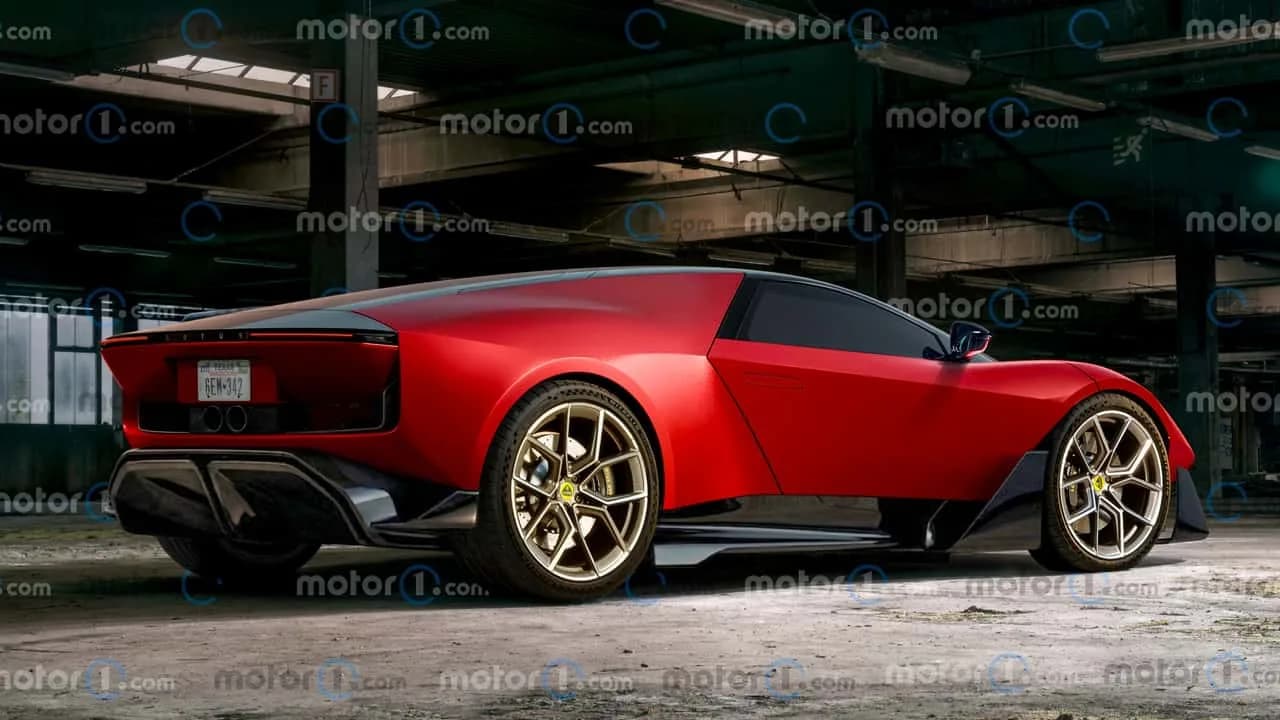
Lotus is developing a new mid-engined hybrid supercar designed to preserve the brand’s lightweight philosophy in an era of increasingly complex powertrains. Known internally as the Type 135, the car is scheduled to debut in 2028 and will sit between the Emira and Evija in the Lotus lineup.
Lotus CEO Feng Qingfeng says the Type 135 will use a V6 or V8 engine paired with hybrid assistance. In V8 form, the car is expected to produce more than 1,000 horsepower, while Lotus is targeting a total vehicle weight of around 1.5 metric tons, or 3,307 pounds. The road-going model will also be joined by a GT3 race car.
Powertrain and performance targets
The Type 135 is being engineered around an 800-volt electrical architecture, an internal-combustion engine and electric motors. Lotus has not released the complete technical specification, but the basic configuration points to a high-output hybrid powertrain with the engine mounted in the middle of the car.
The company is working with Horse on a high-performance powertrain and an eight-speed dual-clutch transmission. The transmission is intended to manage the system’s high torque without adding unnecessary mass. Lotus says the V8-powered version will exceed 1,000 hp, although it has not announced acceleration, top-speed or battery figures.
Weight reduction is a central part of the program. Lotus says it has used Formula 1 technology to reduce the mass of a 150-kilowatt electric motor from the typical 75-95 kilograms (165-209 pounds) to just 20 kg (44 lbs). That saving will be important as the Type 135 adds a hybrid system, high-voltage hardware and a large-displacement engine.
Lotus returns to a multi-powertrain strategy
The Type 135 also marks a shift in Lotus’s product direction. The company had previously committed to becoming fully electric, but it now says the global transition to EVs is progressing at different speeds. Lotus is consequently pursuing a multi-powertrain strategy that includes combustion engines, hybrids and battery-electric vehicles.
Lotus says hybrid technology will help the V6 or V8 model meet global emissions regulations while retaining the character expected from a traditional sports car. The approach allows the company to continue developing combustion-powered performance cars without ignoring tightening regulatory requirements.
Esprit name remains unconfirmed
Lotus has not officially confirmed the Esprit name for the Type 135, but the project is widely expected to revive the badge after a 22-year absence. The last Lotus Esprit, which ended production in 2004, used a V8 engine in its final form.
For now, the Type 135 remains under development. Lotus says it will reveal more product and technical details later, but its intended formula is established: mid-engined V6 or V8 power, hybrid assistance, an 800-volt electrical system, more than 1,000 horsepower in V8 form and a target weight of approximately 1.5 metric tons.