By
By 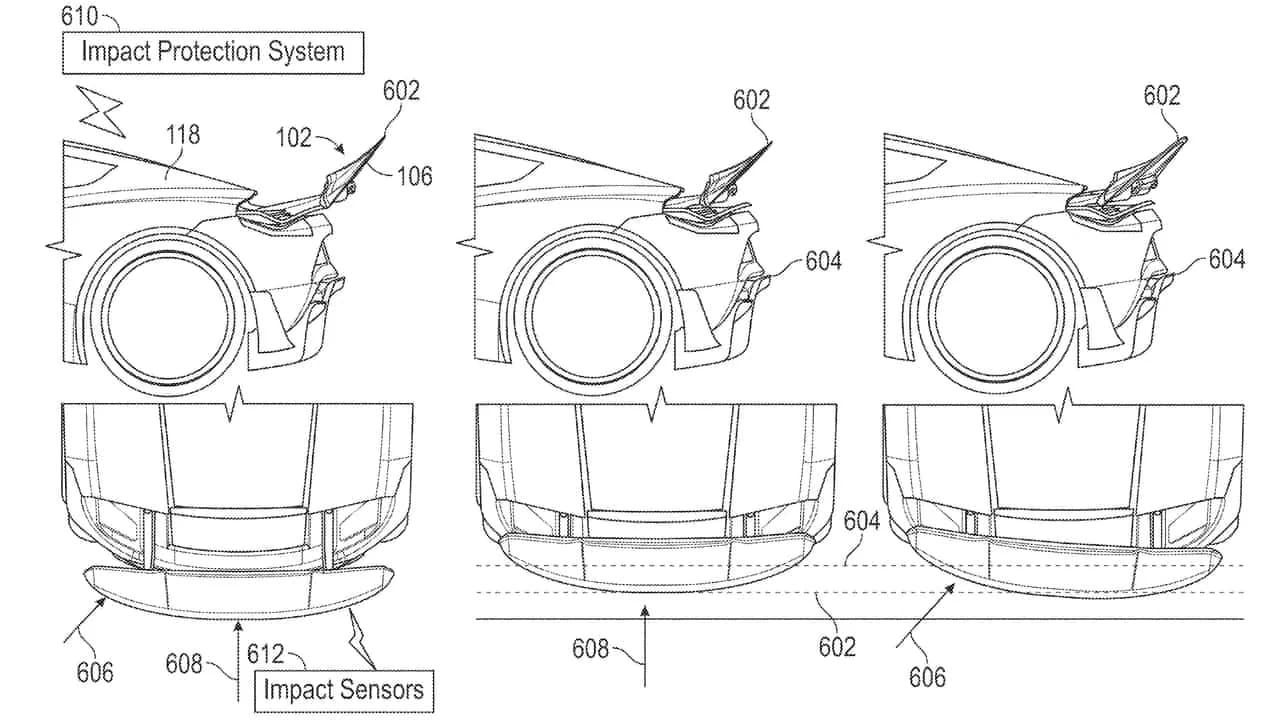
A newly published Tesla patent offers the clearest look yet at a possible active-aerodynamic system for the next Roadster, which Tesla is due to reveal on October 1. The filing describes a two-piece rear wing that hides flush with the body when stowed and can generate up to 1,543 pounds of downforce at speeds above 100 mph.
The design remains a proposal rather than a confirmed production feature. The application, titled Deployable and Active Rear Wing Assembly with Safety Features, was filed in August 2025 and appeared in the U.S. Patent and Trademark Office’s public database in September 2026. David Lemire and James Michael Arthur Crook are listed as inventors.
How the Tesla Roadster wing works
The patent splits the wing into a main element and a smaller leading-edge slat. A four-bar linkage holds the two sections 3 to 15 millimeters, or 0.1 to 0.6 inches, apart when the wing is deployed. That opening allows airflow between the elements and changes the way the wing interacts with the air.
Tesla’s proposed mechanism can move from fully stowed to fully deployed in under three seconds. Once extended, the wing’s angle can change in under a quarter of a second. When retracted, the assembly sits within the car’s bodywork rather than leaving a fixed spoiler exposed.
Control would not depend solely on a driver pressing a button. The system described in the filing can use vehicle speed, steering angle, braking information, GPS location and autonomous-driving sensor inputs to determine when to deploy and how far to adjust the wing. The patent also describes an automatic track-focused mode activated by location.
From zero downforce to 700 kilograms
The filing outlines several aerodynamic settings. Its Formula 1 DRS-style mode produces 0 kilograms of downforce to reduce drag on straights, while a high-downforce setting is rated at up to 700 kg, or 1,543 pounds, above 100 mph.
That added grip comes with an aerodynamic penalty. Moving the wing out of its DRS position adds 350 drag counts, according to the patent. Returning it to the low-drag position reduces drag by 250 counts compared with the deployed-but-undeployed state described in the document.
Crash protection and Roadster timing
Safety is a central part of the design. On a central or corner impact, the wing is described as retracting until its trailing edge lines up with the rear of the car. The system combines sensor inputs with a mechanical retraction function to pull the wing back toward the body during a crash.
None of these details confirms that the active wing will appear on the production Roadster. Tesla’s October 1 reveal event should clarify whether the company brings this patent’s hardware to the car’s bodywork, but the filing shows that Tesla is considering a system capable of switching between minimal drag and substantial track-focused downforce.