By
By 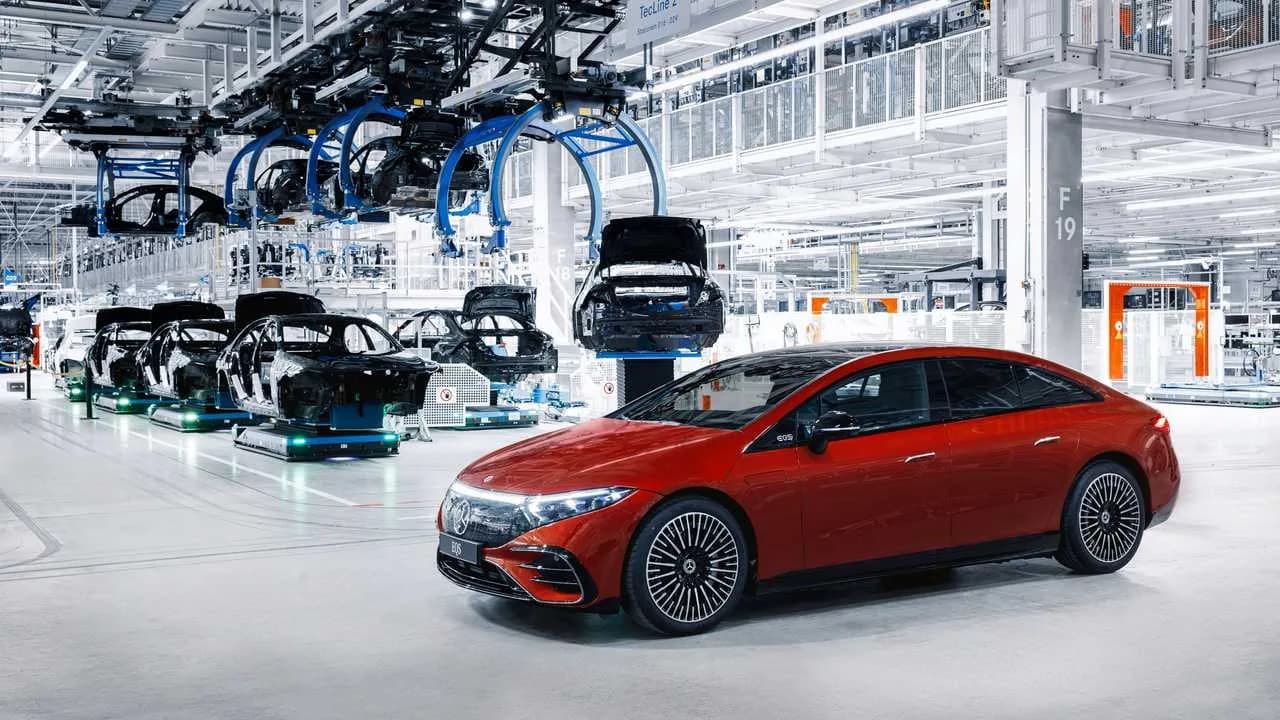
Mercedes-Benz has warned employees that one German assembly plant and one powertrain facility could close if labor costs do not fall. The company has not identified the sites or set a timetable, but production chief Michael Schiebe said keeping every German plant open is not guaranteed during an employee meeting in Sindelfingen this week.
The conditional warning puts two facilities directly in the spotlight as Mercedes negotiates with labor representatives over cost reductions. According to Reuters, the automaker still says its objective is to retain all of its German locations.
Which Mercedes plants could be affected?
Mercedes has described the potentially affected locations only by their functions. One would be an assembly plant handling body construction and final assembly, while the other would be a powertrain facility producing engines, transmissions or electric-drive components.
Mercedes operates final-assembly facilities in Sindelfingen, Rastatt and Bremen. Powertrain production is spread across seven additional German sites: Untertürkheim, Affalterbach, Berlin, Hamburg, Kamenz, Kölleda and Arnstadt. The company has not ranked those locations by risk, and none has been confirmed as a closure candidate.
A Mercedes spokesperson confirmed Schiebe's remarks but did not say when management might make a decision. That leaves the warning as leverage in ongoing discussions rather than a formal closure announcement.
Why Mercedes says German production is too expensive
Mercedes is framing the issue around competitiveness rather than a lack of factory capacity. The automaker says German production costs are no longer competitive by international standards, with labor expenses a major factor.
The company points to its Kecskemét plant in Hungary as a benchmark. Mercedes says costs there are 70 percent lower than at its German sites. That cost gap has already influenced decisions such as moving small-car and G-Class production to Hungary.
The warning follows similar pressure across Germany's auto industry. Volkswagen has begun restructuring after issuing a profit warning, while Audi has raised the possibility of closing its Neckarsulm plant for related cost reasons.
What happens next?
For now, Mercedes has not announced a specific site closure, production transfer or deadline for labor-cost reductions. The next major signal will be whether the company names facilities or reaches an agreement that preserves them.
If negotiations fail, the consequences could extend beyond Mercedes employees. Plant closures would also put pressure on suppliers and the regional economies surrounding the affected factories. For buyers, the immediate impact is unclear, since Mercedes has not tied the warning to a particular model or production program.