By
By 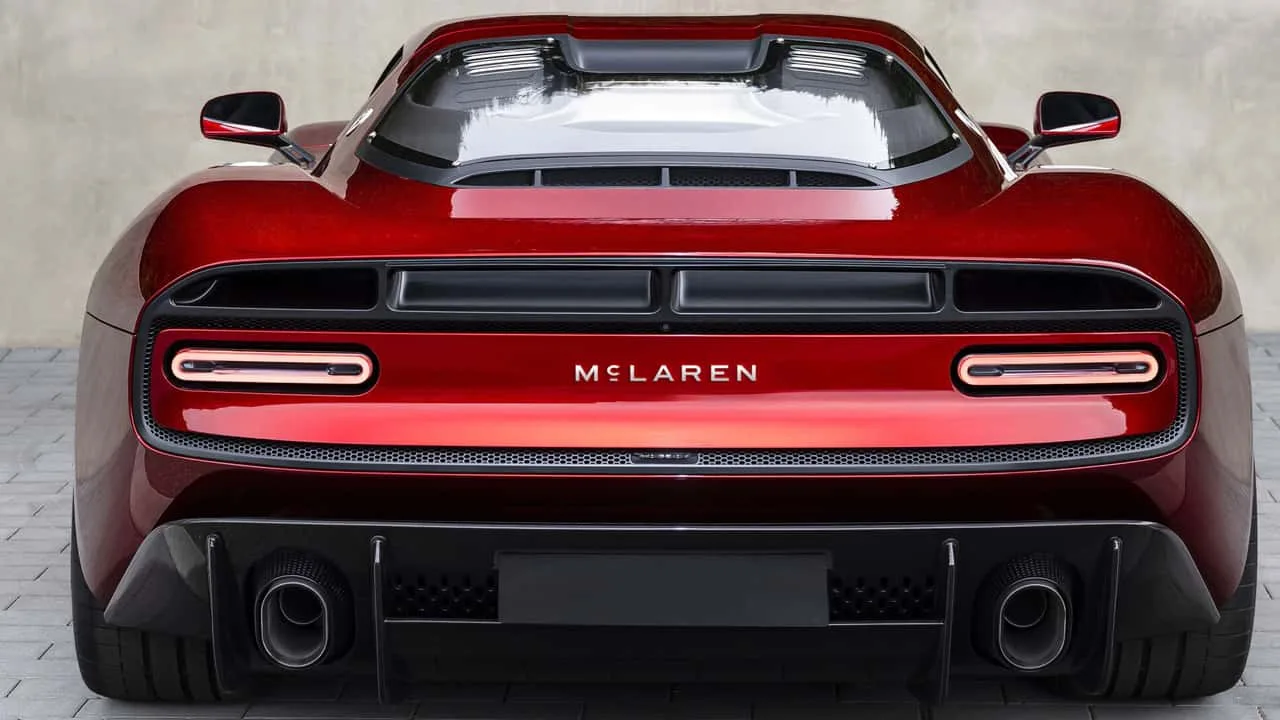
McLaren has unveiled a refreshed brand identity built around a revised Speedmark logo and a new wordmark. The update preserves the British automaker’s familiar visual cues while reconnecting the brand with its racing history, founder Bruce McLaren and the company’s New Zealand beginnings.
The timing is significant. McLaren is preparing to move beyond the relatively narrow range of mid-engined sports cars that has defined its modern road-car business. The company’s long-denied SUV is now officially in development, with its launch expected before the end of the decade.
A new McLaren wordmark
The revised wordmark takes inspiration from the lettering that once appeared above a service station in Remuera, New Zealand, before McLaren became a global automotive and motorsport name. McLaren says those original letterforms have been reinterpreted for a new era rather than copied outright.
The company’s visual identity has changed several times since Bruce McLaren founded his racing team in the United Kingdom in 1963. The original crest featured a Kiwi as a reference to McLaren’s New Zealand roots. Later designs evolved as the team grew into an international motorsport operation.
The Speedmark has been part of McLaren’s identity since 1997. Its streamlined shape was inspired by the vortices generated by a race car’s rear wing and has since become closely associated with the company’s supercars.
McLaren Automotive and Racing adopt the identity
McLaren says the new identity will be used across both McLaren Automotive and McLaren Racing. It is intended to create a consistent visual language for vehicles, racing activities, retail locations, digital platforms and other parts of the business.
The first model to wear the updated logo is the McL 6GT with a manual gearbox. The branding will eventually appear across a wider product range as McLaren prepares for a much broader future.
What comes next for McLaren
The upcoming SUV represents the biggest change to McLaren’s road-car strategy. Its arrival will put the brand into a segment far removed from the low-slung, mid-engined sports cars that established its modern reputation.
McLaren has also indicated that a second front-engined model with rear seats is possible, although the source does not provide a confirmed production plan or timing for that vehicle. Together, those potential models suggest the company is preparing to serve more than traditional supercar buyers.
For now, the logo update is a statement of continuity as much as change. McLaren is modernizing its identity without abandoning the racing heritage and founder’s legacy that define the marque. The revised badge will soon need to represent not only sports cars and race cars, but also the company’s forthcoming expansion into new vehicle types.