By
By 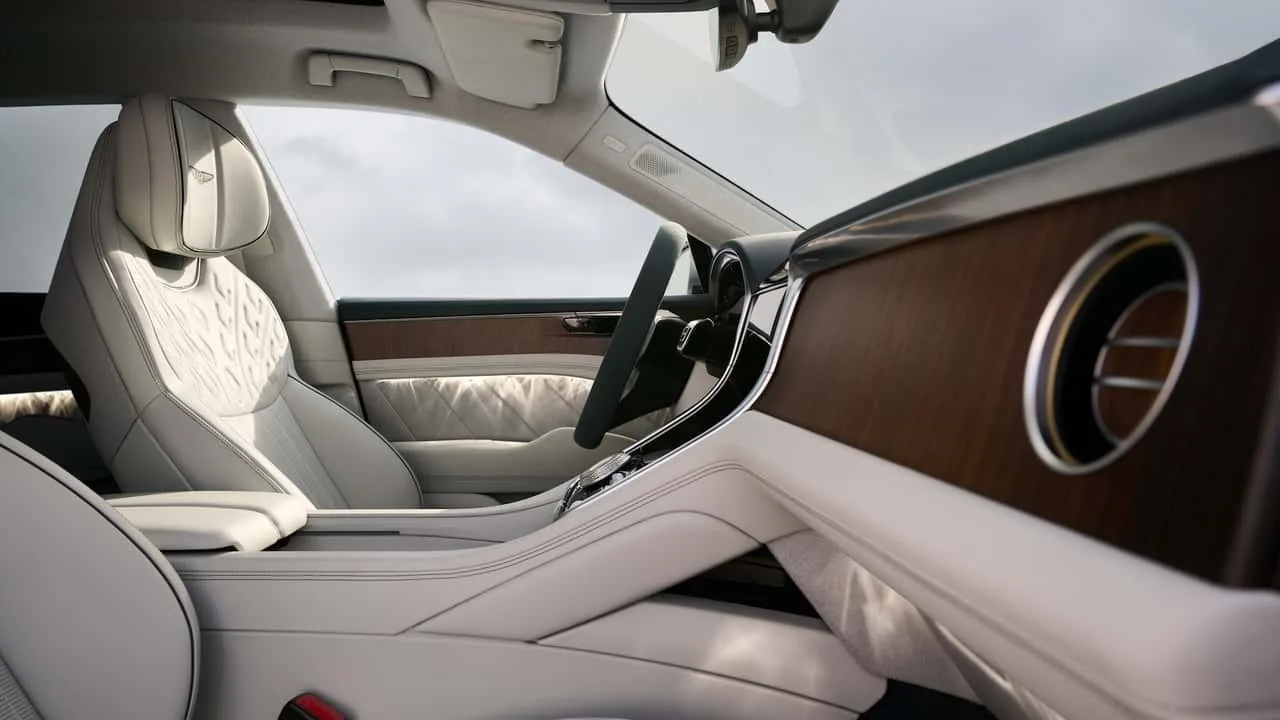
Bentley’s upcoming Torcal EV will not offer a front passenger screen, despite the feature becoming increasingly common in luxury cars. Martin Page, Bentley’s product line director, said the brand would “never” add one, arguing that in-car technology should enhance the experience rather than dominate it.
Page discussed the decision during a media presentation at Bentley’s Crewe headquarters. A passenger display was considered during the Torcal’s development, but Bentley ultimately rejected it as a solution without a clear need. The company also decided the feature did not fit its human-focused approach to luxury.
Why Bentley rejected the passenger display
“Technology has to add value. It should not dominate the experience,” Page said. He added that a front passenger screen might make more sense once vehicles become autonomous, when occupants could have more freedom to use the cabin as a living space.
The decision comes as passenger screens spread across high-end vehicles. The 2020 Porsche Taycan was among the first to offer an optional, dashboard-mounted 10.9-inch display. The BMW 7 Series has a standard 14.6-inch passenger screen, while the upcoming Audi Q9 is set to use a 12.3-inch unit. Mercedes-Benz offers its much larger Hyperscreen display across some models.
Passenger screen usage remains limited
There are signs that the technology may not be delivering enough value for every owner. A recent JD Power report found that more than a third of owners whose vehicles have front passenger screens never use them. The same study recorded 21.3 reported problems for every 100 vehicles equipped with the feature.
That means more than one in five vehicles with a passenger display generated a reported issue, according to the study. Bentley’s position reflects a broader question for luxury automakers: whether adding another screen meaningfully improves the ownership experience or simply increases complexity.
Torcal cabin still gets a large OLED display
Skipping the passenger screen does not mean the Torcal will have a low-tech interior. The EV will share a curved OLED central display with the Porsche Cayenne Electric, although Bentley will use its own software presentation.
While the Cayenne Electric uses a 14.9-inch passenger screen, the Torcal will replace that space with a more traditional luxury treatment. Buyers will be able to look across an expanse of wood, aluminum, or carbon fiber instead.
Page compared Bentley’s approach with a Michelin-starred restaurant offering a carefully selected set of courses rather than an overwhelming menu. The upcoming $640,000 Ferrari Luce is another new EV that reportedly avoids a front passenger screen, suggesting the feature may not be essential even at the highest end of the market.