By
By 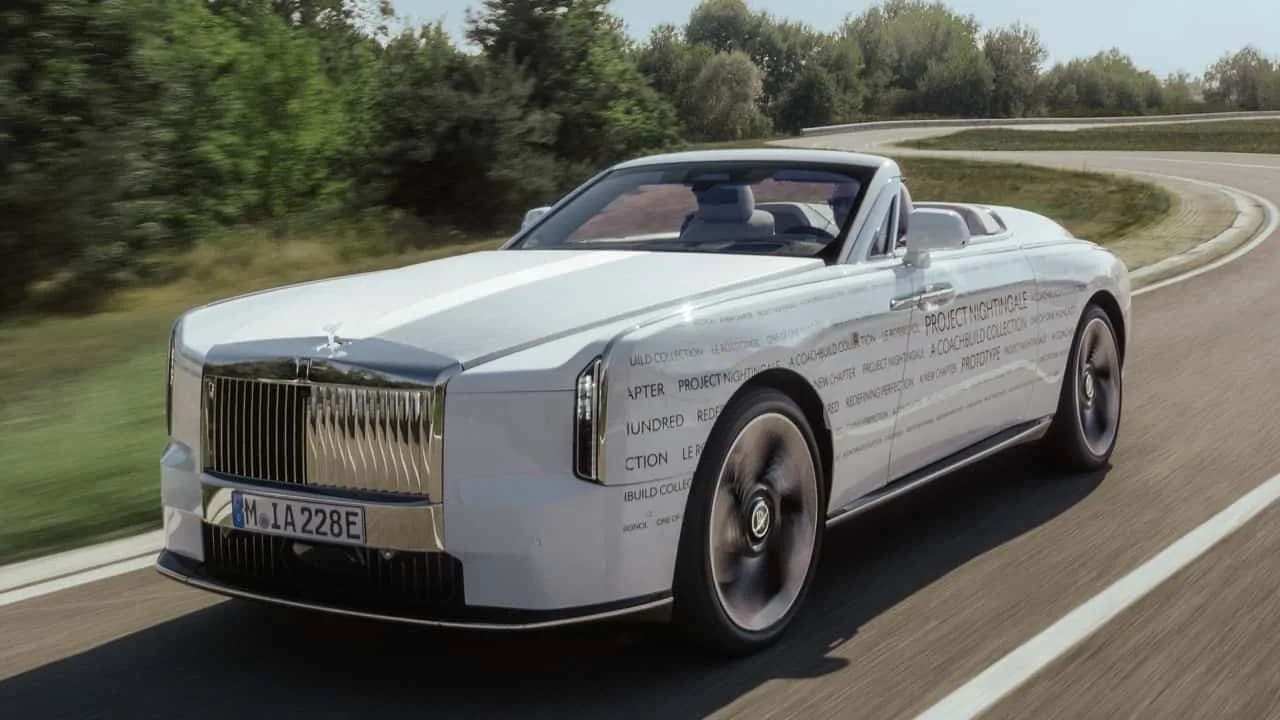
Rolls-Royce has started global testing of Project Nightingale, an electric, two-seat Coachbuild Collection model scheduled for customer deliveries in 2028. Before any of the approximately 100 buyers receives a key, engineers will open and close the car’s unusual sideways-opening Piano Boot 15,000 times.
The test program is part of an extensive validation effort covering 350 collective weeks of engineering work. Rolls-Royce says the goal is to ensure that Nightingale’s bespoke features maintain the smooth, quiet operation expected from the brand over decades of use.
Global testing for the electric coachbuilt
Project Nightingale prototypes are being tested across Mediterranean coastal roads, the Arctic Circle and the deserts of the Arabian Peninsula. The cars will also reach elevations of 9,020 feet while facing significant changes in temperature and weather.
Rolls-Royce Chief Executive Chris Brownridge connected the project with the experimental “EX” cars developed by Sir Henry Royce during the 1920s. The name Nightingale is an English rendering of Le Rossignol, the house Henry Royce built for his engineers near his winter home on the French Riviera.
Before road testing began, Rolls-Royce completed more than 1,430 hours of aerodynamic development, including wind-tunnel work. Engineers will now validate those results at a private facility, where Nightingale prototypes will reach speeds of up to 155 mph. One target is near-silent cabin operation at speed.
What is the Piano Boot?
The Piano Boot is a split trunk lid that swings sideways on a cantilever. Rolls-Royce has not previously used the mechanism in its lineup, making durability testing particularly important for this limited-production model.
The automaker says the lid will undergo up to 15,000 opening and closing cycles. The test is intended to preserve the mechanism’s smooth operation and the visual theater of its signature opening movement throughout the vehicle’s life.
Convertible roof faces extreme-condition testing
Nightingale’s convertible roof receives similarly detailed scrutiny. Its lining combines cashmere, fabric and high-performance composites, and the roof is undergoing 10 separate tests covering its materials, closing mechanism and operation in temperatures up to 176 degrees Fahrenheit.
Rolls-Royce has also developed a bespoke electric wind deflector. It is designed to prevent high-pressure air from circulating into the cabin when the roof is lowered, and engineers are testing it across a range of speeds.
Price and availability
At 226.8 inches long and configured for two occupants, Nightingale is an invitation-only electric coachbuilt model aimed at around 100 existing Rolls-Royce clients. Pricing has been reported at around $4 million and up, although the source does not identify a single confirmed price. Deliveries are planned for 2028.