By
By 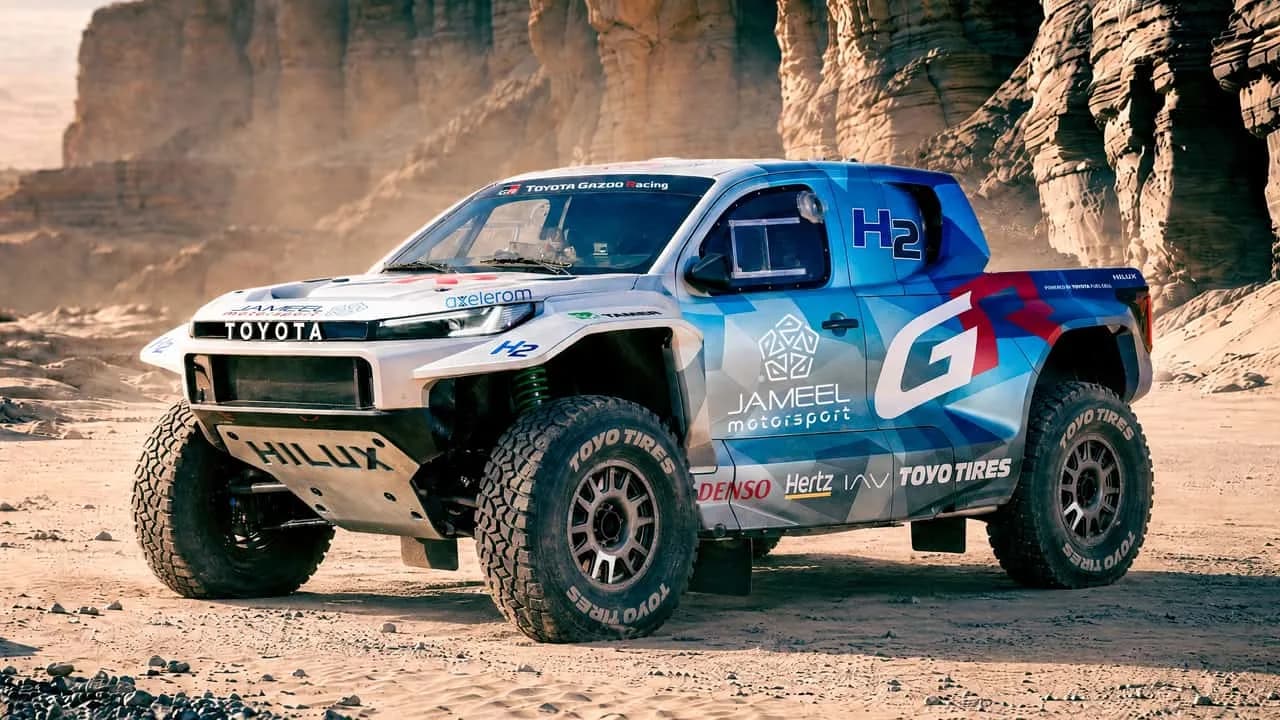
Toyota Gazoo Racing will run a hydrogen-powered Hilux in Dakar Future Mission 1000 from January 1 through January 15, 2027. The DKR GR FC Hilux is a fuel cell version of Toyota’s existing Dakar truck, and it will tackle about 621 miles of special stages using hydrogen as its only fuel.
The entry will compete in Dakar Future Mission 1000, an alternative-energy challenge held alongside the main Dakar Rally rather than in the headline car class. Toyota has now revealed the truck’s race livery and confirmed four partners for the Saudi Arabian program: Jameel Motorsport, Denso, Toyo Tires and IAV.
Hydrogen fuel cell power for Dakar
The DKR GR FC Hilux replaces the combustion engine used by Toyota’s conventional Dakar Hilux with a Toyota fuel cell stack. Its exhaust is primarily water vapor, with the fuel cell system converting hydrogen into electricity to drive the truck.
Toyota describes the system as a “2.5-generation” setup. According to the company, it combines second-generation fuel cell technology with newer third-generation components. The system remains behind the entirely new stack Toyota is developing for future road applications.
The rally program is intended to expose the fuel cell Hilux to the punishing conditions of competition, including heat, vibration, sand and long off-road running. Toyota previously supported hydrogen prototypes from the HySE group in Dakar Future Mission 1000, which completed the format in 2024 and 2025.
What the Hilux program means for road cars
Toyota is targeting a production Hilux Fuel Cell for 2028. The company says that road-going truck is expected to deliver more than 250 miles of range and a 5,500-pound towing capacity.
Running the DKR GR FC Hilux in Dakar gives Toyota a demanding environment in which to gather operating data before that commercial launch. The rally will also test how the fuel cell system, cooling hardware and electronic components cope with sustained loads far beyond typical road use.
Partners supporting the Dakar entry
Jameel Motorsport will provide a valuable local connection because its parent organization is Toyota and Lexus’s authorized distributor in Saudi Arabia, the country hosting Dakar 2027. That relationship gives the team a regional logistics and support base.
Denso will support the vehicle’s parts supply and fuel cell-related hardware, while engineering company IAV contributes technical expertise. Toyo Tires will supply its Open Country M/T-R tires, which it says are designed for top-level rally raid competition, rough terrain, wear resistance and durability using sustainable materials.
Toyota’s Dakar fuel cell effort also fits a broader hydrogen strategy. At the same Hannover transport show where the program was detailed, Toyota announced fuel cell agreements with truck manufacturers Scania and Iveco.
Why Dakar matters for hydrogen
The DKR GR FC Hilux is Toyota’s first fuel cell electric entry in Dakar Future Mission 1000. Its performance will provide data on hydrogen refueling, component reliability and thermal management in extreme conditions.
The program cannot solve the larger challenges facing hydrogen vehicles, including refueling infrastructure and cost. It can, however, give Toyota and its partners real-world evidence from one of motorsport’s toughest environments before the Hilux Fuel Cell reaches the road.