By
By 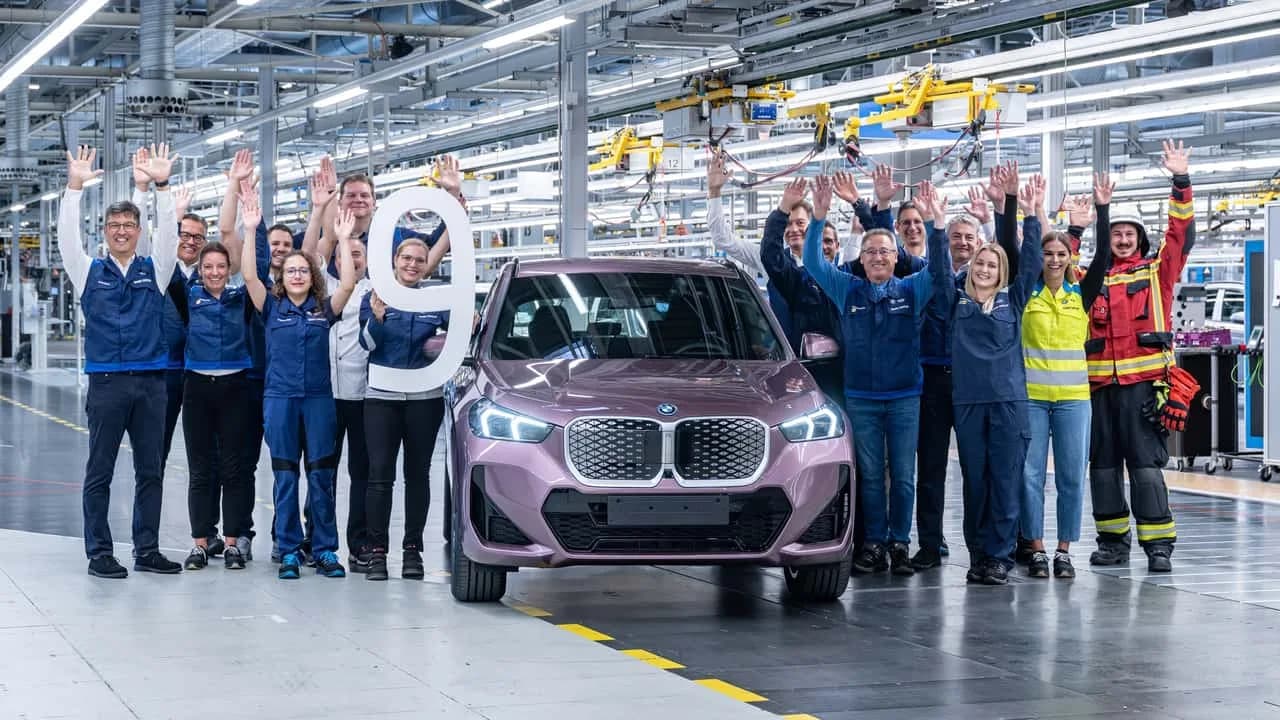
BMW has built its nine-millionth vehicle at the Regensburg plant in Germany, reaching the milestone in September 2026 during the factory’s 40th year of production. The vehicle that crossed the mark is a fully electric BMW iX1 finished in Velvet Orchid II Metallic for a customer in Sweden.
The unusual color comes from BMW Individual, allowing the buyer to order a finish outside the standard paint range. BMW says the iX1 was built to the Swedish customer’s own specification rather than selected from dealer inventory.
From the E30 3 Series to the iX1
Regensburg began producing cars in 1986, starting with the E30-generation BMW 3 Series. The original agreement with the city called for production of 400 cars per day and 3,500 jobs. Four decades later, the factory operates at a very different scale.
BMW says the plant ran three shifts in 2025 and completed a vehicle approximately every 57 seconds. It produced roughly 356,000 vehicles that year, making Regensburg BMW’s highest-volume factory in Europe. The Regensburg and Wackersdorf sites now employ around 9,000 people.
The plant had built more than 8.7 million vehicles by the end of 2025. The additional production needed to reach nine million arrived in the factory’s 40th year, giving BMW a neatly timed anniversary marker.
One line, three powertrain types
Regensburg currently focuses on the BMW X1 and X2 crossover families. Gasoline, plug-in hybrid and fully electric versions are assembled on the same production line, giving BMW the ability to adjust the mix of vehicles without operating separate facilities for each powertrain.
That flexibility supported production of more than 150,000 electrified vehicles at Regensburg in 2025, while combustion-powered models continued to use the same manufacturing system. The nine-millionth vehicle therefore highlights more than a single custom-painted electric crossover: it demonstrates how BMW is adapting an established factory to changing demand.
Why the milestone matters
The iX1’s role in the anniversary reflects BMW’s growing emphasis on compact crossovers and electrified models. The X1 and X2 use a production approach that lets the company increase or reduce electric-vehicle output without waiting for a dedicated EV plant to come online.
BMW has not disclosed how many of the nine million Regensburg-built vehicles were 3 Series models, although the model has played a significant role in the factory’s history. The current milestone instead puts the spotlight on the iX1 and on a manufacturing strategy built around powertrain flexibility.