By
By 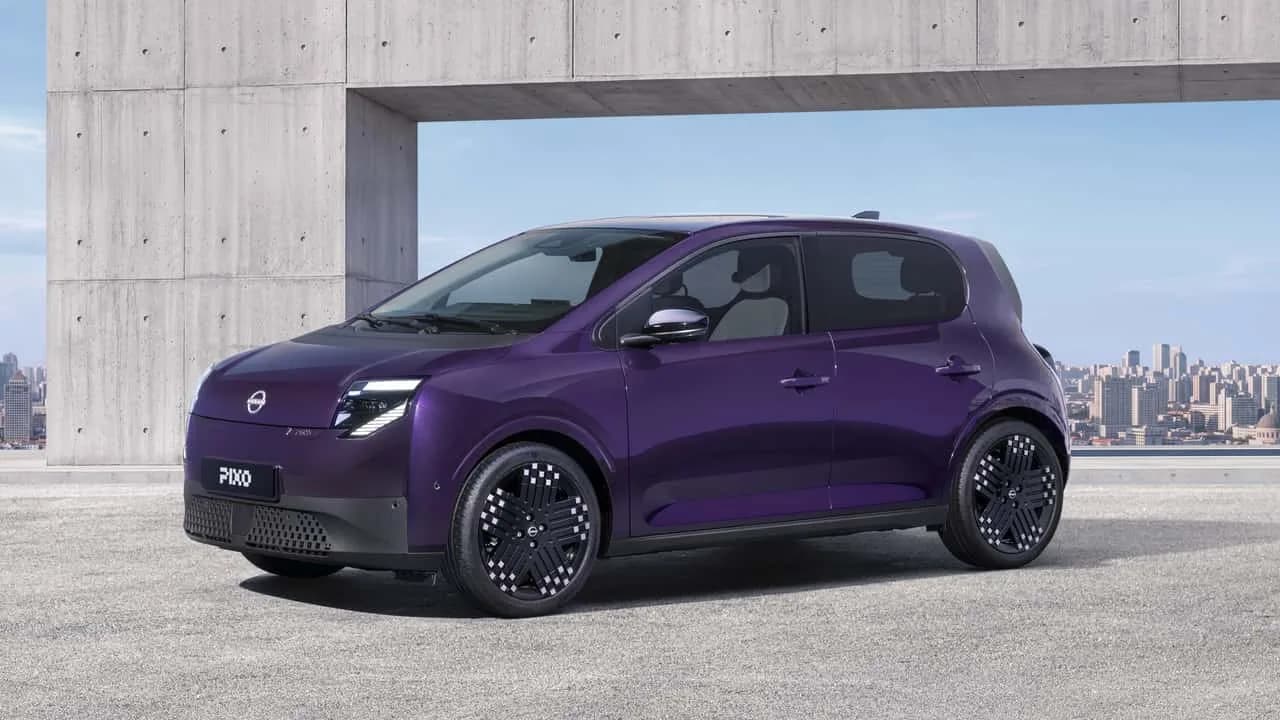
Nissan is reviving the Pixo name for a small electric city car based on the Renault Twingo. The new Pixo shares its core hardware with the Twingo and second-generation Dacia Spring, will be built at Renault’s plant in Novo Mesto, Slovenia, and is scheduled to reach European customers early next year.
The Pixo will sit below Nissan’s Renault 5-based Micra in the brand’s European lineup. Nissan has not yet announced pricing, but it plans to reveal that information in December. Like its Renault and Dacia relatives, the entry-level version is expected to cost less than €20,000.
Electric powertrain and charging
The city car uses a 27.5-kWh lithium iron phosphate battery pack. Nissan lists a WLTP driving range of 161 miles (259 kilometers), giving the Pixo enough claimed range for regular urban commuting and short trips beyond the city.
A 50-kW DC charger can replenish the battery from 15 to 80 percent in around 28 minutes. The Pixo also supports bidirectional charging at 11 kW, allowing energy to flow both ways between the car and compatible equipment.
Its front-mounted electric motor produces 80 horsepower and 129 lb-ft (175 Nm) of torque. Nissan quotes a 0-to-62 mph (0-to-100 km/h) time of 12.1 seconds, putting the emphasis firmly on compact urban transport rather than acceleration.
Compact dimensions, flexible cabin
The Pixo measures just 149.5 inches (3,796 millimeters) long and has a 32.5-foot (9.9-meter) turning circle. Those dimensions should make it easier to maneuver through tight streets and fit into small parking spaces.
Inside, the Nissan shares its basic layout with the Twingo, including the same wheelbase and independent sliding rear seats. Cargo capacity stands at 12.6 cubic feet (356 liters) with the rear seats in place. Sliding and folding those seats increases the available space to 43.1 cubic feet (1,221 liters).
Nissan design, Renault hardware
Although the technical package is shared, Nissan has created a distinct exterior identity. Pixel-style detailing at the front and rear gives the Pixo a visual signature, while the overall profile remains clearly related to the Twingo. The design is less playful than the Renault and less boxy than the Dacia Spring.
The Pixo will join a growing group of small European EVs, including the upcoming production version of Volkswagen’s ID.Every1 concept and the resurrected Citroën 2CV. Its combination of a modest battery, city-friendly dimensions and shared development could help Nissan enter the affordable EV market without creating an entirely separate platform.